

The group led by Nicholas Prozzillo were Andrew Sillett, Meg Peacock, Catherine Hilliard, John Pusey, Andrew Patterson and John Chelsom. We left on Sunday morning October 18th and returned on Tuesday 20th 2026 in the evening. Weather variably inclement most of the time.
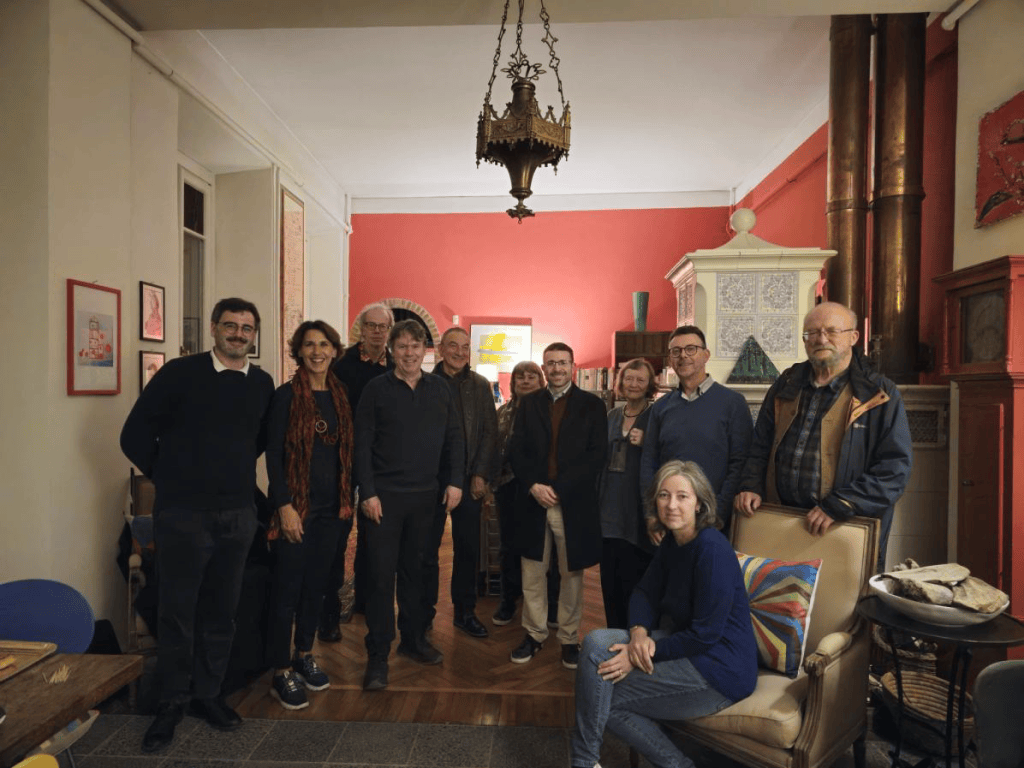
As regards the formal business, Monday morning began bright and early in the meeting room of the Mascioni workshop. Andrew Sillett, Nicholas Prozzillo, Daniele Invernizzi and Andrew Jolliffe were joined remotely by Andy Lewin, while Andrea Mascioni gave his apologies for his absence due to ill health. They enjoyed a fruitful discussion of the timetabling of the work, the proposed specification of the new instrument, and the logistics of installing the instrument. We were pleased to see that we are all on the same page with these issues, and agreed to a follow-up meeting with Andrea in November to discuss the specifics of the timetable. We also had a good discussion of the various possibilities surrounding publicizing the new instrument and ensuring that it receives the attention it deserves, both within the community and (far) beyond.
Those of us who had visited the BMW-Mini plant in Cowley had expected to see something similar to an assembly line, but although both were unexpectedly quiet, here were fewer people. Only one organ is actually being worked on at any given time, so there is no danger of a mix-up of pipes. Several may be in various stages of negotiation or preparation: ours will be installed in 2028, behind us in the queue is an American organ for a church in Columbia. The one on the stocks today is a restoration and rebuilding of the nineteenth century organ at Alba Cathedral. We were told that the firm does not have a house style, but a house standard.
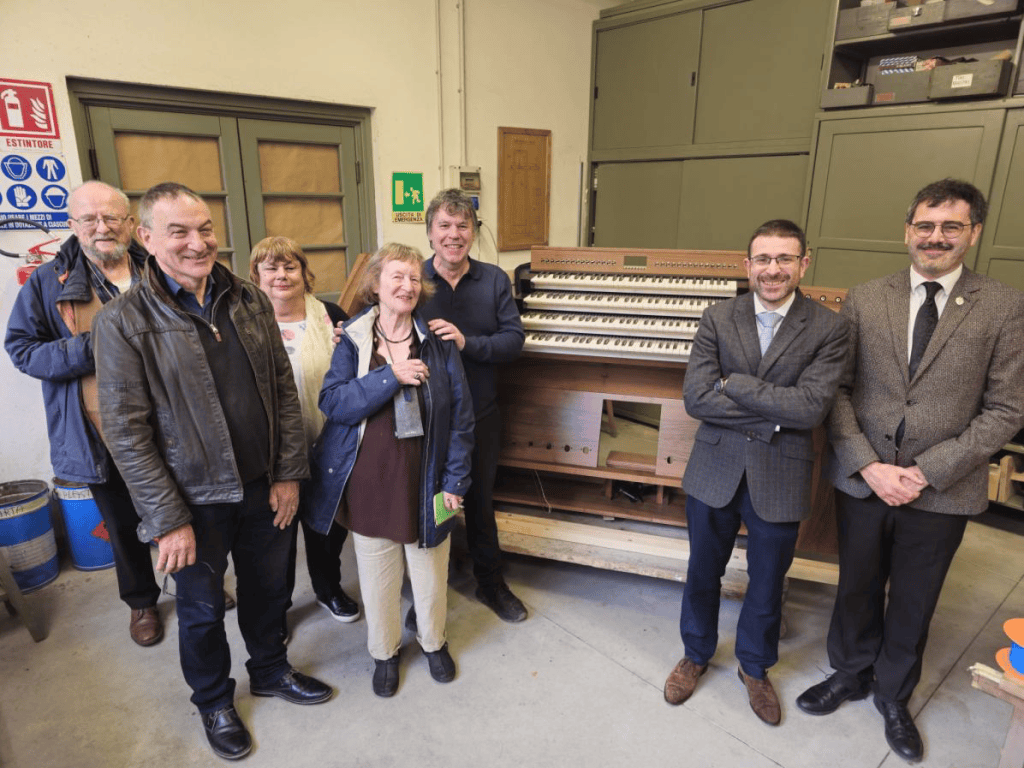
We passed from the drawing office, which in 1829 was driven by water power but is now solar-powered, into a high hall where the wooden windchests are made. Some years ago the firm produced an organ for Tokyo cathedral with 32-ft pipes which necessitated raising the roof still higher. The smell of fresh wood is delightful. On the new windchests, Andrew Patterson pointed out the places where our old organ at St Giles had cracked and leaked. Several kinds of timber can be used, such as silver spruce or Italian oak, but each organ will be made only of one kind, and the pipes will all be made of the same batch of timber. When the organ is complete, it is not possible to replace individual pipes. It is most important that the organ is protected from bird droppings, rats, mice and particularly from incursions of bats. Bats in the belfry are known to be bad news, but bats in the organ could cause the organ to be declared a sanctuary and therefore unusable: a nightmare prospect.
After the wood shop, the metal works. Pipes are made of an alloy of lead and tin, which is mixed in a cauldron. As we passed, Andrew Patterson blew down a pipe which will be a gemshorn one day and produced a sound. We continued through the conservation area, where the façade of the Alba organ is being regilded and restored to its former glory, and into the voice shop. The work here converts the noise made by the pipe into a sound and then a note. Some notes are beyond the range of the human ear, but add richness to the overall sound. We watched as pipes individually were checked for length, sometimes watching slivers being cut off – if too much is cut off, then it is simply soldered back again for another attempt. Voicing the pipe is the first stage; and the second part takes place in the building where the organ will live and be fitted to its characteristic acoustic.
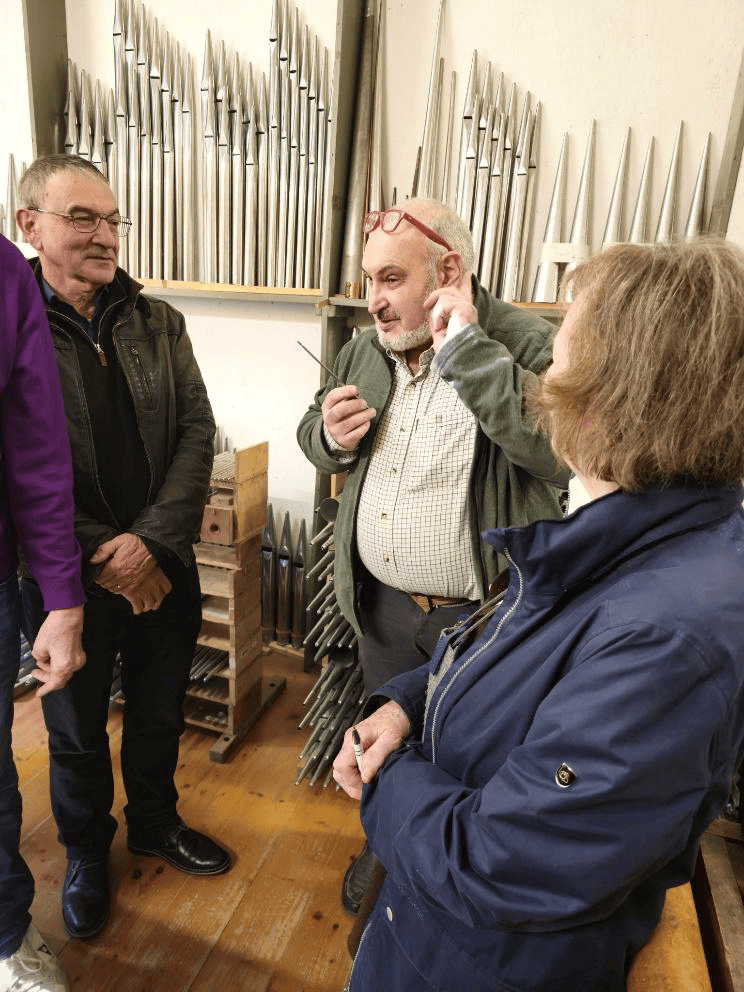
It becomes clear that each part of the organ is bespoke and that each member of the workforce is highly skilled in wood or metal or acoustics and that their craft is labour intensive. “This won’t get superseded by AI, then”, quipped one of us. And it is clear why organs cannot be made on the cheap, and why they are as expensive as they are, and worth every penny.
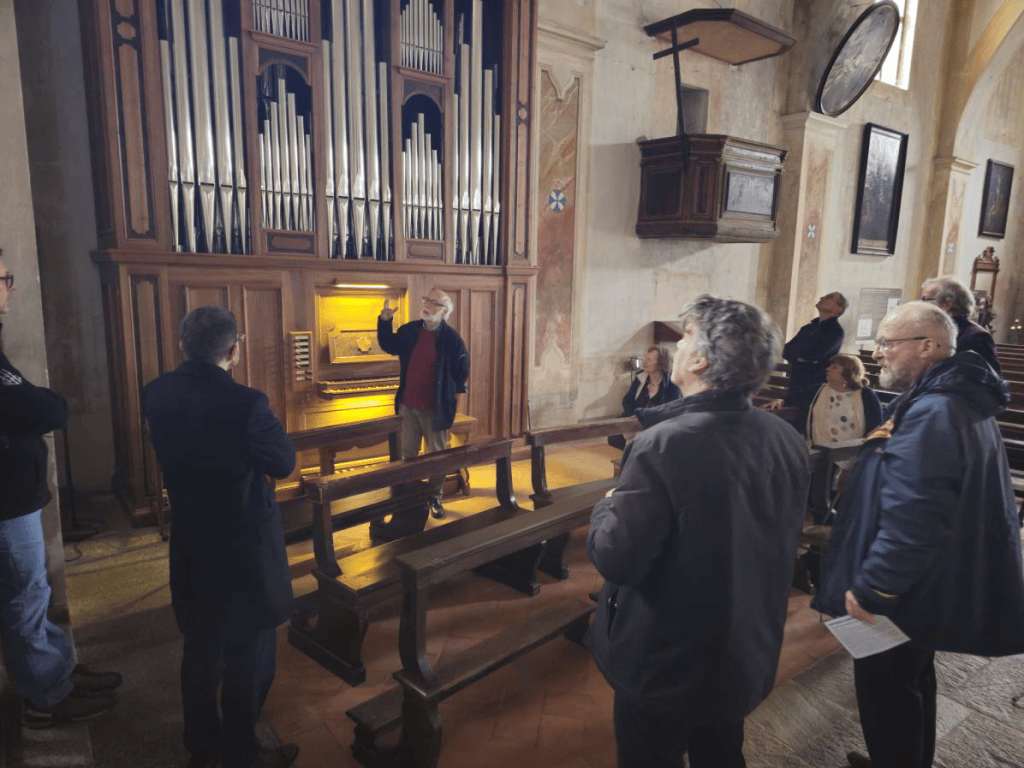
We were driven down the hill to a small church and introduced by Lorenzo Ghielmi to a very small quite recent Mascioni organ. He explained that this one is designed for baroque repertoire and Bach and does not have the temperament to play Romantic music such as Elgar or Mendelssohn. He played some Bach, and Andrew Patterson played some Elgar and showed how the timbre of some of the lower notes have a rough edge – though most listeners would not notice that. Our organ will be tempered to play across the repertoire, so that it will support St Giles teaching commitments as well as parish worship.
Nicholas Prozzillo writes: ‘While the instrument in Azzio differs from the one proposed for St Giles’, it nevertheless demonstrates Mascioni’s ability to build and voice organs successfully in acoustic environments comparable to that of St Giles’. The instrument also features several stops that offers useful points of reference – albeit at a preliminary level – for some of the tonal colours envisaged for St Giles’. One stop, in particular, demonstrates considerable versatility, with the potential to provide sensitive and effective accompaniment to a solo treble, whether in a verse anthem or a contemporary anthem. It was a real privilege to have Maestro Ghilmi introduce us to the instrument, share his knowledge and insight, and bring its capabilities to life through a series of demonstrations.’
During the visit, over several different kinds of risotto and Lombard wine and in the people-carrier hired by John Chelsom, there were informal discussions about other aspects of the project – for example a webcam linked to our Project900 website was thought to be a possibility and a new thought for Mascioni – and even future progress beyond the installation. An organisation of Friends of the St Giles Organ was mooted, which might relieve the parish of the expense of the organ’s maintenance by raising funds independently through regular concerts. Other thoughts much too blue-sky to be written down here were also aired.
The visit was intensive and fascinating. We are so grateful to all the people who patiently showed us their routines and their skills, and their obvious love of what they did. Those of us who are not musical felt mildly ashamed that we take for granted so much of the background to the music provided for our worship.
Catherine Hilliard
November 2026

